By: Cris Lewis, Vice President of Alliance of Therapy Dogs (ATD)
The short answer to the question above is, “Yes.” But a more detailed answer follows below. The information listed below is specific to testing requirements and expectations used by the ATD, a national registry and certifying therapy dog organization with over 20,000 volunteer Member teams throughout the United States, Canada and Puerto Rico. A therapy dog team consists of a human Handler and a dog.
Temperament
Therapy dogs need to have a calm and gentle disposition or temperament. They must be good around other dogs, calm when strangers pet them all over, not jump on others, walk politely at the handler’s side on a leash without pulling, and not be startled by things such as strange noises, smells, and medical equipment. ATD testing process has four main components, requiring the applicant team to meet with a Tester/Observer (T/O) at least 3 separate times, and some of these meetings occur in actual medical settings. The T/O provides mentoring and coaching as part of the testing process.
Obedience, Commands, Tricks
A therapy dog doesn’t have to perform any tricks or know any special commands, such as “fetch.” However, therapy dogs must listen to their Handlers. The dog and the human Handler must work together as a team.
ATD does not require formal obedience training, nor any titles such as the AKC Canine Good Citizen Test. These opportunities can be helpful to prepare for the testing process, but they do not guarantee the dog and team will pass the ATD Certification Test. Many great therapy dogs have little to no formal obedience training. Some highly trained dogs with many obedience titles work very well with their handler, but simply don’t want to deal with strangers or unusual settings.
Health Requirements
A therapy dog must be current on all vaccines required by the local laws, have a negative fecal test every 12 months, and be clean and well-groomed for each visit.
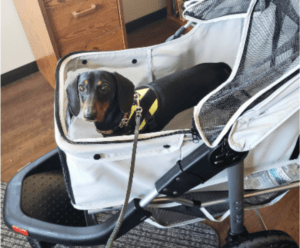
Differently-abled dogs using a dog wheelchair or cart, a dog carrier, or who have hearing, or sight limitations, are welcome to be tested like any other dog. They can become a certified therapy dog if they pass the certification process. ATD does want to ensure that the equipment a differently abled dog might use is comfortable for the dog, and the dog is not nervous when hooked into the equipment. If the handler might be removing the equipment while visiting, such as to place the dog in a chair or lap, the handler needs to make sure their dog is also comfortable doing the visit and being handled without the wheelchair, cart, stroller or carrier. Handlers must always put the safety and well-being of their dog as a priority.
Dogs may not wear diapers or belly bands during ATD visits, so it will be important to have the differently-abled dog on a potty schedule if there are any continence concerns.
This is very attainable, as ATD does have certified therapy dogs doing regular and successful visits because their handlers truly know their dogs and pay close attention to any needs.
Pet Therapy Opportunities
There are certainly opportunities for Intervertebral Disc Disease (IVDD)-affected dogs to enjoy therapy dog volunteering and sharing smiles and joy with many. ATD has certified therapy dog teams that use dog wheelchairs or carts. Some roll along in major airports as part of programs offering stress relief to passengers waiting for flights. Other wheelchair or cart dogs enjoy wheeling along in schools meeting kids and teachers, as well as at college campuses and local library reading programs.
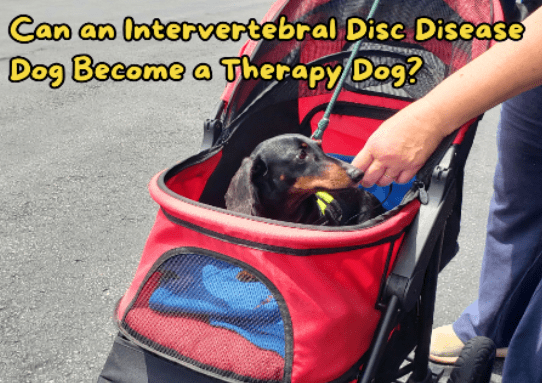
Another way an IVDD dog with limited mobility can participate is with the use of a pet stroller. ATD has a stroller certification available as part of the testing process if needed or requested by the human handler. This then allows the dog to use a stroller while doing volunteer visits – the dog can easily be reached by people they are visiting, while the handler doesn’t have to carry the dog. A limited-mobility dog that might get tired easily can participate in longer visits when using a pet stroller, making it more enjoyable for all involved.
If you think your dog has the temperament, is at least 1 year old, and you want to find something an IVDD dog can do safely, consider looking at the ATD website for more testing details – how to find a local T/O and how to contact the ATD national Office with questions. The ATD website is www.therapydogs.com
An IVDD dog with a great temperament often has a great outlook on life. They can set a good example and give hope to humans who might need some inspiration to overcome challenges.