Written by: Maria, ATD Member
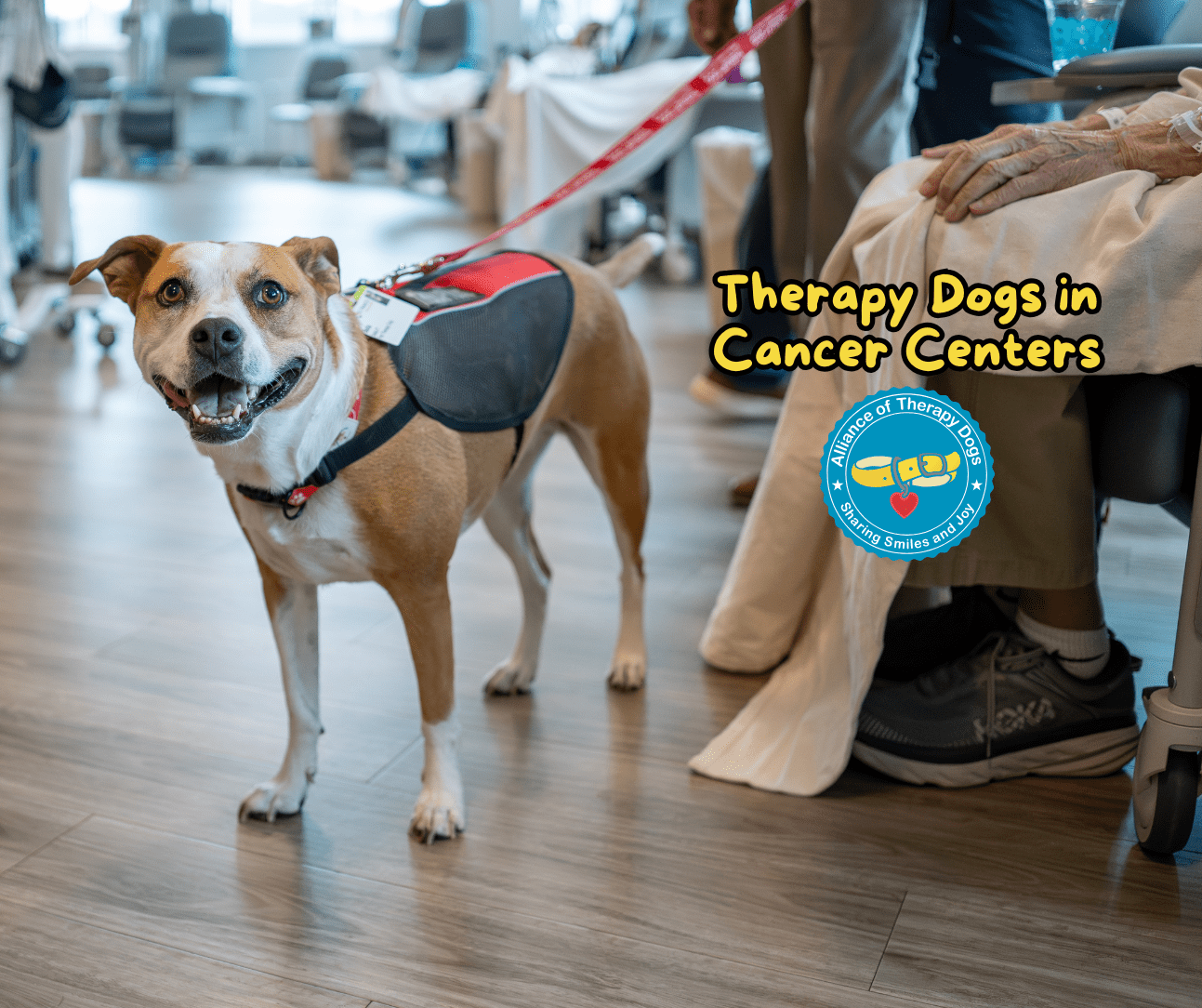
A cancer diagnosis can stir up a wide range of emotions for both patients and their loved ones. As a leading cause of illness in the United States, many of us have either faced cancer ourselves or known someone who has. Therapy dog teams can greatly benefit from understanding what to expect and how to make visits to a cancer center as comforting and meaningful as possible.
Research has shown many benefits of patients interacting with therapy animals. These therapy animals can offer comfort and support, helping patients manage the emotional challenges of cancer by:
- Easing anxiety, depression, and panic attacks.
- Lowering blood pressure and stress, while boosting mood.
- Providing a distraction during treatments.
The positive effects of pet therapy are not limited to the patients alone. Medical staff and family caregivers as well experience emotional and mental benefits from spending time with therapy animals.

What unites us as ATD Members is our love for dogs and our care for people. Our capacity for compassion and empathy can turn a simple therapy dog visit into a rewarding experience, not just for the dog teams but also for those receiving care. Some therapy dog teams have personal connections to cancer, either as patients themselves or through caring for loved ones, and they often say that channeling their own experiences helps forge connections during visits. Here is what ATD Members had to say about their experiences as a therapy dog team at a cancer center:

“As a cancer survivor myself, I have more than once said to a patient, ‘I have been in that chair and I want you to know to always keep a positive attitude and see that I am proof that what you’re going through, it’s all worth it.’ My visits with my dog are especially important to me. I am blessed to be able to share my therapy dog with the patients at the cancer center.”
– Kaye & Tango

“Two years ago, my son was going through chemotherapy 1,500 miles away from me. I could not be with him, but Jesse (my dog) and I were able to feel connected by visiting others. I believe that Jesse felt my emotions coming through the leash and provided an extra dose of love.”
– Michele & Jesse

If you’ve had an opportunity to participate in a therapy dog visit at a cancer center or medical facility, you might know that extra training is often required to volunteer in medical settings. It’s important to follow all ATD Rules, as well as the specific protocols and policies of the medical facility you’re visiting. Here are some helpful tips:
- Only participate in a dog therapy visit if you’re feeling well; illnesses can be especially serious for immunocompromised cancer patients.
- Bring a positive attitude and be adaptable to the needs of each patient.
- Stay calm and centered to avoid passing on anxiety to your dog.
- Train your dog to leave or ignore items like syringe caps or medications to prevent accidents.
- Be cautious with your dog around medical equipment, placement of IVs and caps.
- The skin of cancer patients is very sensitive and can become dry and develop a rash. Avoid placing your dog’s paws on patients to prevent injury.
- Position your dog in a way that allows comfortable interaction without requiring the patient to stretch or strain.
- Remember, not everyone may want to or has the ability to interact with therapy animals. If your dog can perform tricks, sharing a few can bring smiles.
- Dress up your dog in pet accessories like bandanas or costumes if they tolerate it. It can be a real delight for patients!
- Be aware that the sights, sounds, and smells of medical environments might be overwhelming for your dog. Know when to step back or end the visit if your dog shows signs of stress.
- Lastly, encourage staff and family members to spend time with your therapy dog, as it benefits everyone.
Most importantly, always take care of your own emotional and physical well-being. Therapy dog visits can weigh heavily on your heart and soul, so it’s essential to rest and recharge. By taking good care of yourself, you’ll be able to continue bringing comfort and joy through your therapy dogs, making a difference in people’s lives.