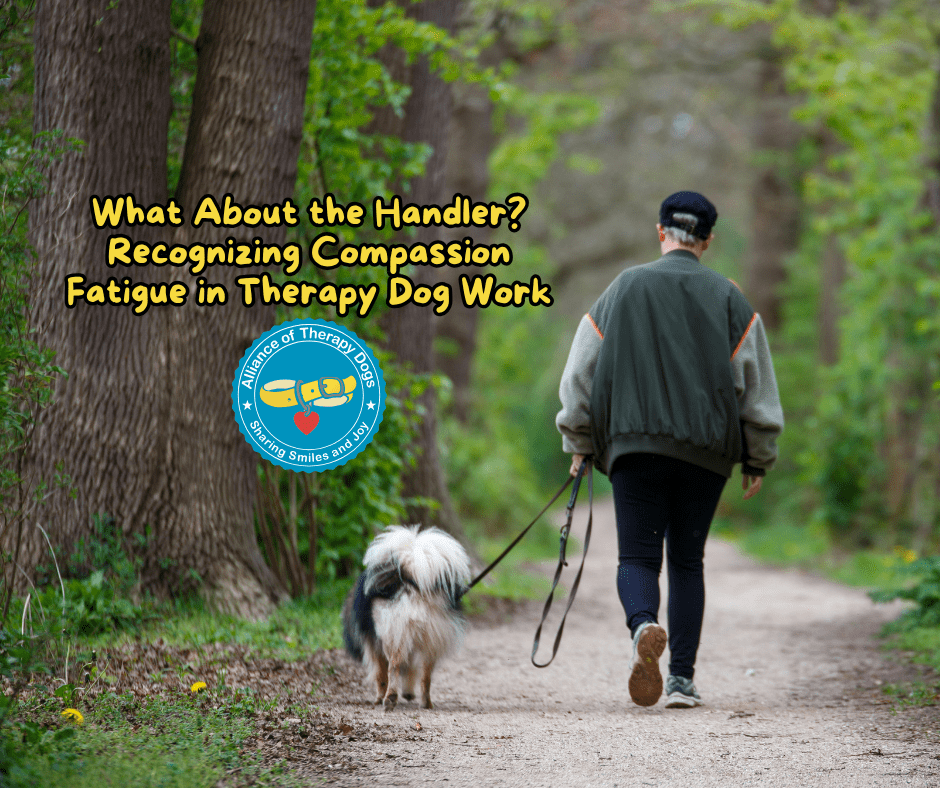
Advocating for your therapy dog is a popular topic, and one we completely agree with. Putting our dogs first is essential to ensuring therapy visits remain safe, positive, and enjoyable for everyone involved. However, while we focus on our dogs’ wellbeing, it is equally important not to forget about yourself, the human half of the team.
Just as we monitor our dogs for signs of stress, fatigue, or burnout, we should also take time to look inward and evaluate our own wellbeing. Therapy dog work can be incredibly rewarding, but it can also be emotionally demanding. Making sure we are healthy, rested, and emotionally prepared helps us handle our dogs most effectively and continue providing meaningful visits to those we serve.
Signs of Compassion Fatigue
Compassion fatigue is a specific type of emotional fatigue that can affect people who care for or support those who are experiencing distress. Unlike burnout, compassion fatigue stems from empathy and caring deeply about others. It occurs when someone becomes overwhelmed by the emotional demands of supporting people who are struggling.
This fatigue is not only emotional, but it can also be physical, leading to overall exhaustion. Compassion fatigue can affect therapy dog handlers just as it affects healthcare professionals and family caregivers.
Some common signs include:
- Emotional exhaustion
- Irritability
- Trouble sleeping
- Physical symptoms such as fatigue and headaches
- Loss of satisfaction in your therapy dog work
How Do I Know If I’m Struggling with Compassion Fatigue?
Compassion fatigue is often discussed in relation to healthcare professionals and family caregivers, but therapy dog handlers can experience it as well. Here are four early warning signs to watch for:
- You Begin Dreading Specific Therapy Dog Visits
Therapy dog work should be enjoyable for both you and your dog. If you find yourself repeatedly rescheduling or canceling visits because you simply do not feel up to them, you dread going on visits, or are consistently late to your visits, take a moment to consider why. Understanding what is causing those feelings can help you address them before they become overwhelming.
- You Continuously Think About Those You Visit
Do specific patients, residents, or situations stay on your mind long after a visit ends? If you find yourself unable to stop worrying about someone you visit, it may be a sign that you are carrying too much emotional weight from your volunteer work.
- Your Body Feels Exhausted Even After Easy Visits
Visits that once left you feeling energized and fulfilled may now leave you drained. When even routine visits seem physically exhausting, it may be your body’s way of telling you that you need additional rest and self-care.
- You Become More Cynical
You may begin to question whether your therapy dog visits truly make a difference. People you visit, fellow volunteers, or even once-enjoyable experiences may start to irritate you. A growing sense of frustration or negativity can be an early sign of compassion fatigue.
Tips to Prevent Compassion Fatigue
There are several ways you can actively work to prevent compassion fatigue as a therapy dog handler.
Remember You Are a Volunteer, Not a Therapist
It is not your responsibility to fix the problems of those you visit. Your role is to provide comfort and an interaction that brings a smile to someone’s face. That contribution is meaningful, even if you cannot solve the challenges they are facing.
Make Scheduling a Priority
If you routinely visit facilities that involve difficult or emotional situations, be intentional about scheduling downtime between visits. Give yourself time to recharge through activities you enjoy, whether that is reading, exercising, spending time outdoors, meditating, or simply relaxing at home.
Create Healthy Boundaries
Do not be afraid to say no. You are a volunteer, and it is okay to decline additional visits if they begin to feel overwhelming. End visits on time, even when it seems easy to stay longer. Extending visits can often affect both you and your dog.
Connect with Other Therapy Dog Handlers
Peer support can be incredibly valuable. Fellow handlers understand the unique rewards and challenges of therapy dog work. Talking with others can help you process difficult experiences and remember that you are not alone in your therapy dog journey.
Allow Yourself to Grieve
Therapy dog handlers often build meaningful relationships. Experiencing the loss of someone you visit can be difficult. Likewise, seeing someone experience a major setback can also be emotionally challenging.
Give yourself permission to feel those emotions. Grief is a natural response to loss and your feelings are valid. Therapy dog handlers often have fewer opportunities to process these experiences than healthcare professionals, making it especially important to acknowledge and work through them.
It Is Okay to Take a Break
A break is not only beneficial for our dogs, but it can also be beneficial for us as handlers as well. Your emotional wellbeing travels down the leash and if you are not in the right state of mind to visit, your dog may be affected too. As your visit calendar begins to fill up, make sure you intentionally schedule breaks for both you and your dog. These periods of rest can help you mentally decompress, recharge, and return to your volunteer work with renewed energy and enthusiasm.
Compassion fatigue in therapy dog handlers is real, but it can also be prevented. Being aware of the signs and symptoms allows you to recognize when it may be developing and take steps to address it before it becomes a larger issue. If you ever find yourself experiencing signs of compassion fatigue and feel like you have no one to talk to, please know that you are not alone. The ATD Office, our Board of Directors, and your fellow ATD Members are here to support you. Sometimes, simply having someone who can listen after a difficult or emotional visit can make a difference.
Please don’t hesitate to reach out when you need support or simply need to decompress after a heavy visit. We are here for you and are always happy to listen.
You can contact the ATD Office at 307-432-0272 or office@therapydogs.com. Remember, taking care of yourself is an important part of taking care of your therapy dog and the people you serve.